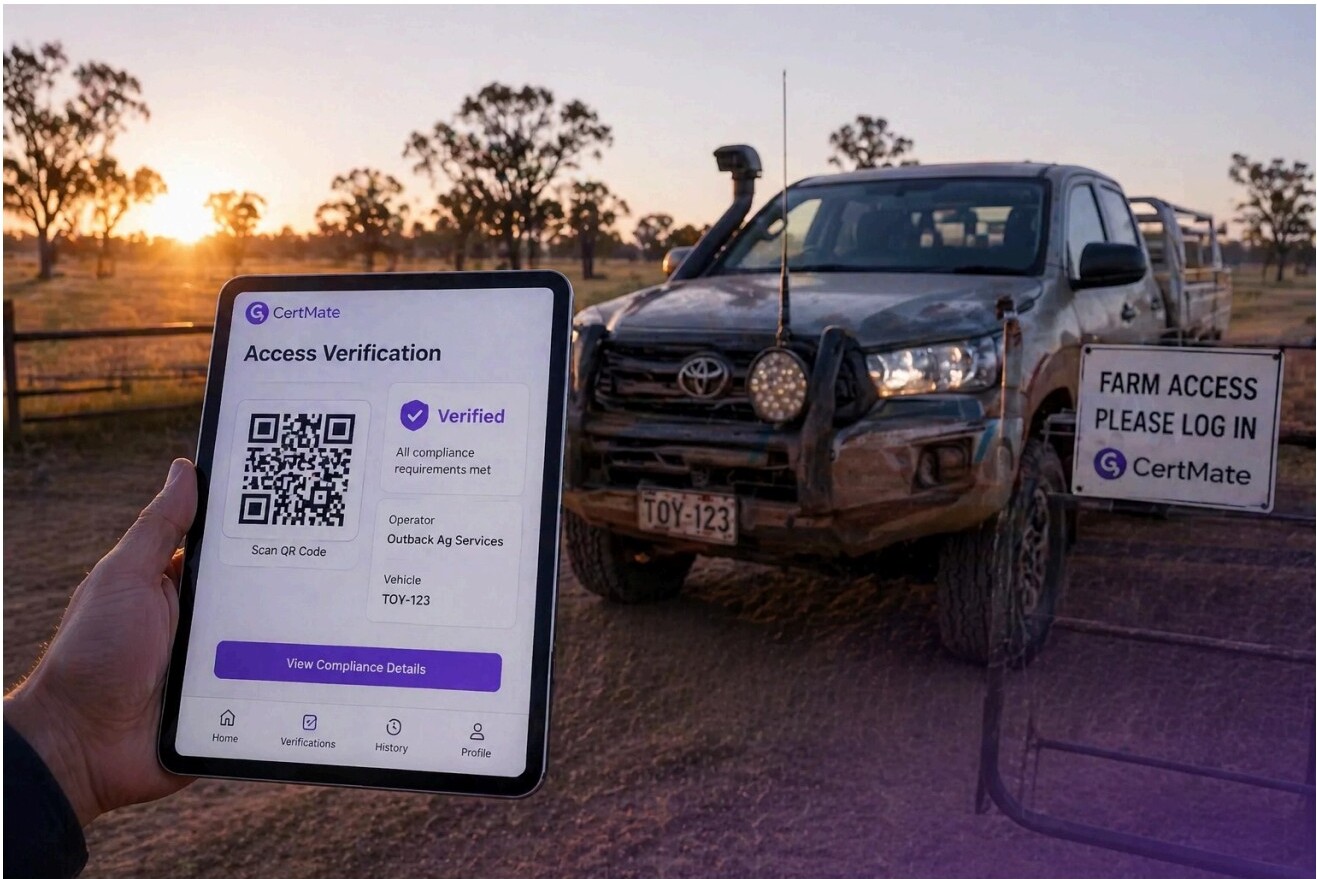
Why Biosecurity Plans Don't Work Without Execution
CertMate Team
Most Australian farms today have a biosecurity plan. Whether it's tucked away in a dusty lever-arch folder on a shelf or saved as a PDF in a shared drive, the plan is usually there. It might be a requirement of regulation, a nudge from an industry body, or a non-negotiable request from a supply-chain partner.
These documents are often comprehensive. They outline risks, assign responsibilities, and map out detailed procedures for everything from weed management to livestock disease protocols. But there's a critical reality we need to face: having a biosecurity plan is not the same as being biosecure.
The real test of farm biosecurity compliance isn't what's written in the office. It's what happens at the gate, on the ground, and every single day in between. In a high-stakes environment where a single breach can cost millions in lost market access or eradicated livestock, "intent" is no longer enough. Execution is everything.
Biosecurity Compliance Is Measured in Action
Think of your biosecurity plan as a blueprint for a house. The blueprint shows where the walls go and how the roof should sit, but it won't keep the rain out until you actually pick up a hammer and build the thing.
In the world of land access compliance, biosecurity plans describe intent. Compliance, however, depends entirely on execution. When an auditor or a regulator shows up, they aren't just looking for your plan — they're looking for the fingerprints of that plan in your daily operations.
In practice, true execution means being able to demonstrate that:
- Visitors were identified before they ever set foot (or tyre) on your property.
- Biosecurity rules were communicated clearly and acknowledged by every person entering the site.
- Risks were declared (like where a vehicle has been in the last 14 days) and those risks were mitigated.
- Access was recorded accurately, leaving no gaps in your site's history.
- Controls were applied consistently, not just when it was convenient or when someone was watching.
Without execution, a biosecurity plan is just a document. And documents don't stop pests, diseases, or contaminants. Systems do.
Where Biosecurity Plans Commonly Break Down
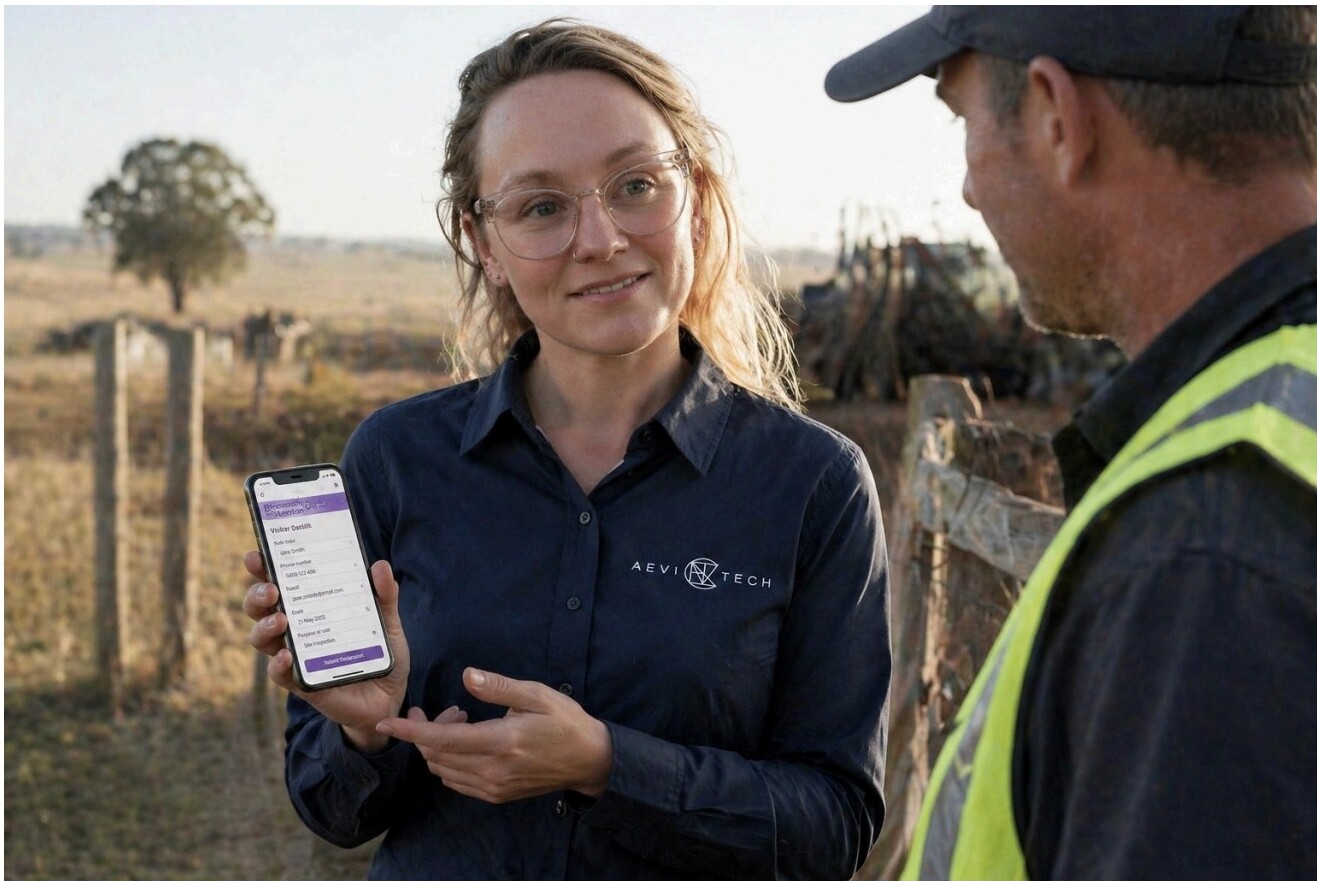
Most biosecurity plans don't fail because they're poorly written. They fail because they rely on manual follow-through in a world that moves too fast for paper and pen. On a busy farm or a remote mining site, people are the biggest variable.
We see the same breakdown points time and time again:
- The bypass — Visitors or contractors bypass the sign-in process because they're in a rush, or the sign-in station is out of the way.
- The verbal induction — Inductions are delivered verbally, leading to inconsistent messaging. One visitor gets the full safety and biosecurity briefing; the next gets a "watch out for the cattle" and a wave through the gate.
- The record gap — There's no hard record of who received what information. If a biosecurity incident occurs, you can't prove the visitor was warned.
- The retroactive log — Paper logs are often completed "after the fact." Memories fade, timestamps are guessed, and the audit trail becomes a work of fiction.
- The disconnect — There's no link between property access and biosecurity declarations. You know someone was on-site, but you have no record of their vehicle hygiene status.
These gaps are rarely intentional. They happen because farms are complex, conditions change, and humans naturally rely on habit rather than rigid systems. Unfortunately, regulators and auditors don't assess your intent or how busy you were — they assess the evidence of your outcomes.
Execution Is What Auditors and Insurers Look For
Recent audits of Australia's biosecurity systems have highlighted a growing concern: undetected biosecurity risk material is increasing. This puts the burden of proof squarely on the landholder. During a biosecurity audit or an investigation following a breach, the focus is brutally simple: Can you prove your biosecurity plan is being followed?
That proof needs to be defence-grade. It usually takes the form of:
- Real-time land access records.
- Digital visitor logs that can't be tampered with.
- Completed and signed induction records.
- Time-stamped, GPS-verified biosecurity declarations.
If these records don't exist — or if they take three days of digging through boxes to find — your biosecurity plan carries zero weight. This is why execution has moved from a "nice-to-have" to the very centre of modern farm biosecurity compliance in Australia.
Digital Systems Turn Plans Into Practice
This execution gap is exactly why we built CertMate. Manual processes simply cannot meet modern expectations for transparency and traceability. Digital compliance tools are designed to bridge the gap between what your policy says and what actually happens at the paddock gate.
CertMate supports your biosecurity execution by:
- Digitising land access compliance — Moving the entire process to a mobile platform that works offline in remote areas.
- Delivering consistent inductions — Ensuring every single person who requests access sees the same critical biosecurity information every time.
- Capturing declarations at entry — Making it impossible to enter the site without first acknowledging the risks and declaring the hygiene status of the vehicle.
- Creating auditable records — Automatically generating time-stamped, GPS-logged records that create a permanent, secure chain of custody.
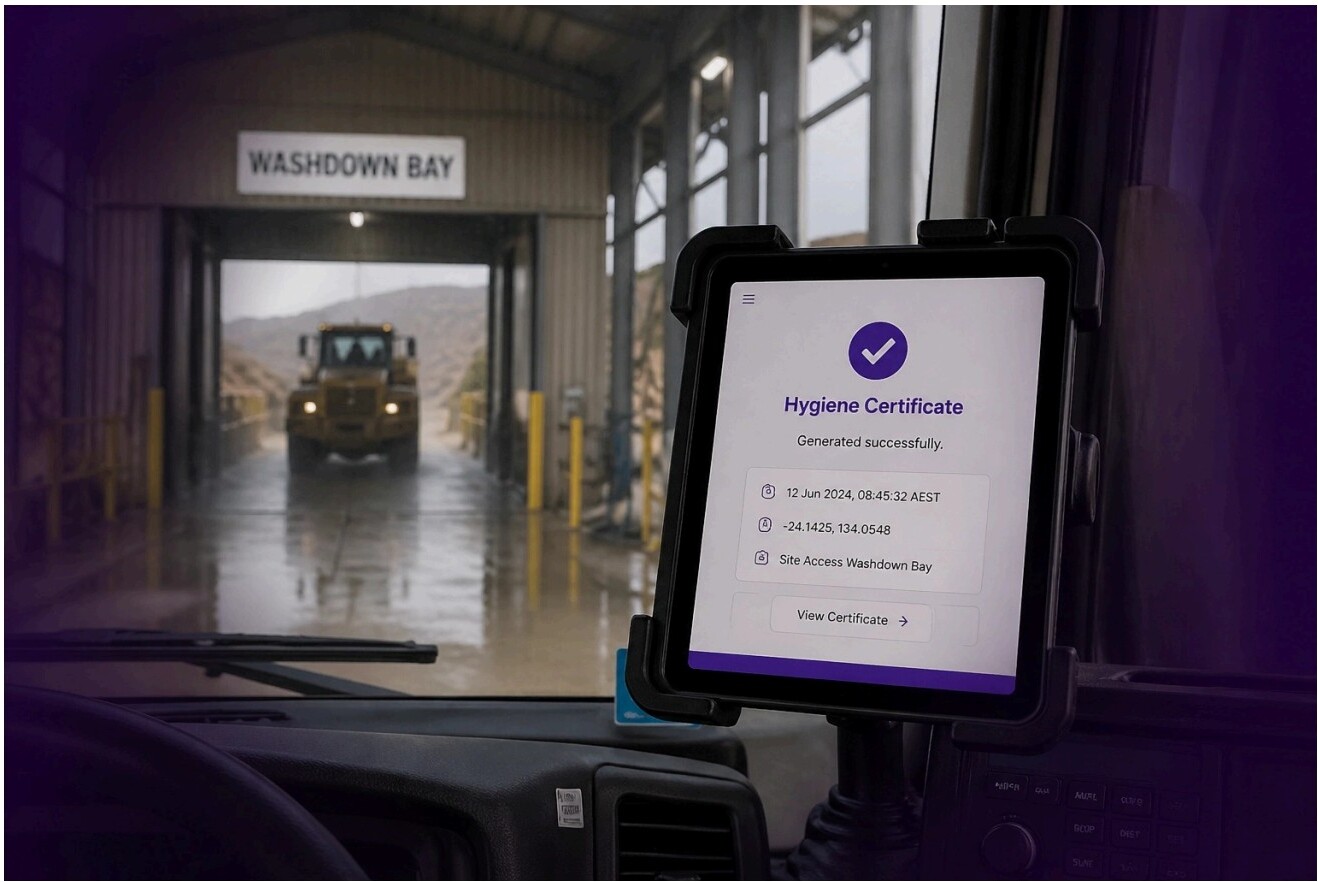
- Linking everything together — Connecting the vehicle's washdown certificate directly to the site access record.
Instead of relying on memory, you gain a system that enforces your biosecurity controls as part of everyday operations. This is execution that is built-in, not bolted-on.
Why Execution Matters More Now Than Ever
The stakes in Australian agriculture are rising. We're dealing with increased movement between properties, larger and more complex supply chains, and a regulatory environment that is under immense pressure to perform.
Beyond just the "stick" of regulation, there's also the "carrot" of market access. Whether it's meeting ESG (Environmental, Social, and Governance) expectations or satisfying the requirements of a high-value export market, the common requirement is the same: prove it.
We are seeing a clear shift in the industry:
- From policy → to proof
- From documentation → to demonstration
- From trust → to traceability
Execution is what makes this shift possible. Digital systems ensure that your biosecurity plan isn't just a liability waiting to be exposed during an audit — it's a working shield that protects your land and your livelihood.
Execution Reduces Risk for Everyone
When a biosecurity plan is executed properly through a digital system, the benefits ripple out across the entire operation. It's not just about passing an audit; it's about operational stability.
- Faster investigations — If a pest or disease is detected, you can instantly pull up every vehicle and person that entered that area over the last month. This allows for a targeted response rather than a total site shutdown.
- Better insurance support — Insurers love data. When you can show a consistent, multi-year history of biosecurity compliance and visitor management, you are in a much stronger position to support claims and negotiate premiums.
- Supply-chain confidence — Processors and buyers are increasingly looking for suppliers who can demonstrate active control over their biosecurity. Digital records give them the peace of mind they need to maintain long-term partnerships.
- Reduced stress — There is nothing worse than the panic of an impending audit when you know your paper logs are incomplete. Digital systems take the stress out of compliance because the evidence is always ready.
The Bottom Line
A biosecurity plan that isn't executed is a liability, not a safeguard. It gives a false sense of security while leaving the gate wide open to risk.
True farm biosecurity compliance depends on consistent land access control, reliable visitor management, and accurate, retrievable records. It requires evidence that can stand up to the highest level of scrutiny — even when the pressure is on.
Execution is where biosecurity succeeds or fails. And execution requires systems designed for the way farms actually operate — not how we wish they operated in a perfect world.
Ready to turn your biosecurity plan into an active defence? Get in touch with our team and start executing on your compliance today.