The Problem With Paper Visitor Logs
CertMate Team
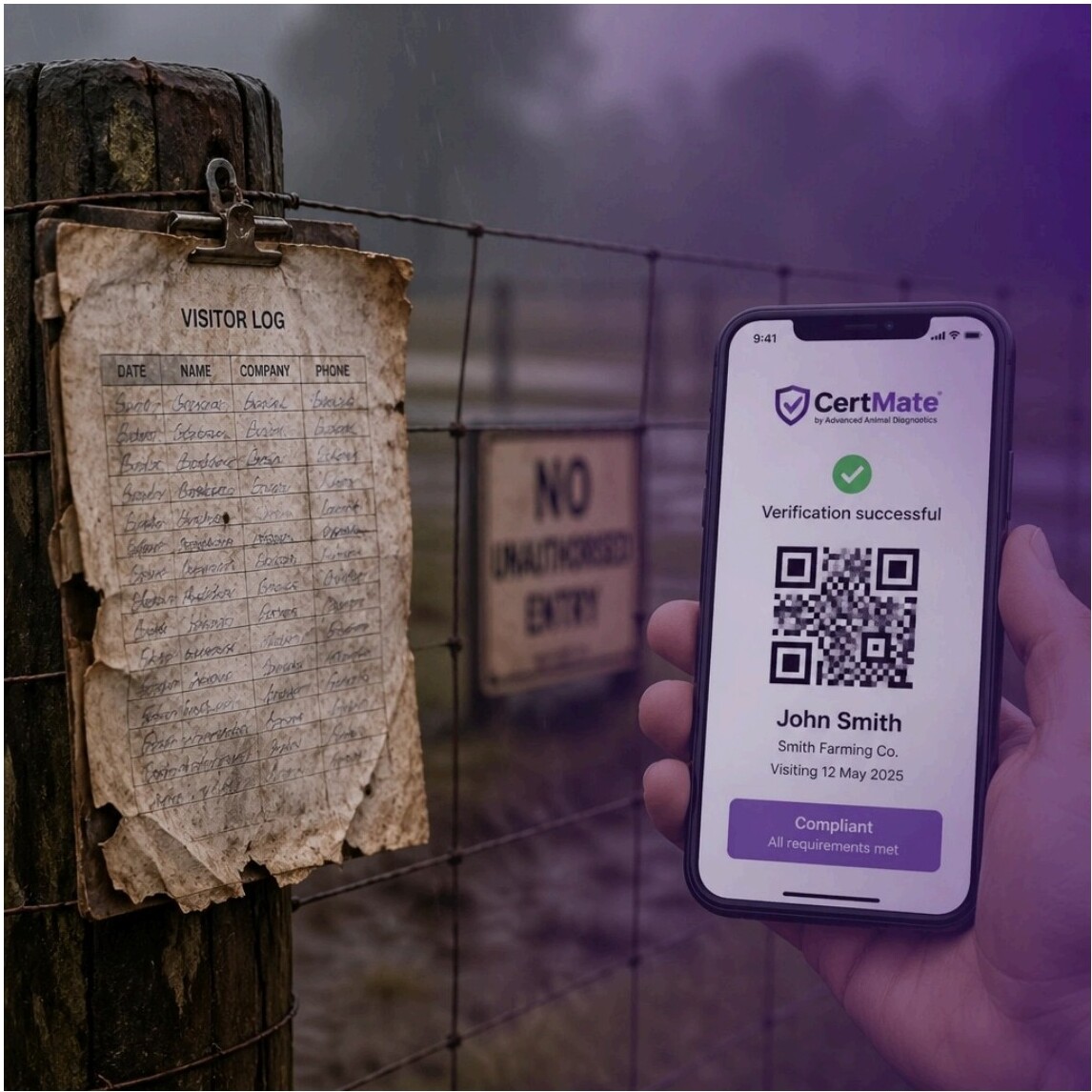
Paper visitor logs have been a familiar sight on Australian farms for decades. You've seen them everywhere — a weathered clipboard swinging from a gate, a dog-eared notebook tossed on a ute tray, or a coffee-stained sign-in sheet pinned to a shed wall.
They look responsible. They feel compliant. But in reality, they often fail exactly when you need them most.
In today's high-stakes agricultural environment, paper visitor logs create a dangerous illusion of farm biosecurity compliance. They provide the appearance of control without the certainty that modern regulations and insurance policies demand. If your biosecurity strategy relies on a pen and a piece of paper, you aren't managing risk — you're just documenting it.
Why Paper Logs Persist (And Why That's a Problem)
Paper systems aren't still around because they're effective. They persist because they're cheap, familiar, and easy to deploy. For years, they were "good enough" because biosecurity expectations were lower and external scrutiny was rare.
That environment is gone.
Australian farms now operate in a landscape defined by increased disease risk, tighter land access compliance regulations, complex global supply chains, and mounting insurance exposure. In this new world, a manual logbook struggles to meet even the most basic compliance benchmarks. It's a 20th-century tool trying to solve 21st-century problems.
The Hidden Failures of Manual Sign-In Books
Manual visitor logs fail in predictable, often catastrophic ways — especially under pressure. When things are quiet, a missing entry feels like a minor oversight. During an investigation, it's a gaping hole in your defence.
1. Incomplete and Illegible Data
On a busy morning with contractors arriving and stock moving, the sign-in process is the first thing to be rushed. You end up with incomplete entries, missing exit times, and handwriting that looks like a Rorschach test. If an auditor can't read who was on your property, that record doesn't exist.
2. Zero Identity Verification
A paper log assumes everyone is who they say they are. There is no way to verify a visitor's identity, their previous site exposure, or whether they've actually completed a required induction. You're essentially relying on the "honour system" for your property's biosecurity.
3. Disconnected Records
Biosecurity isn't just about a name and a phone number. It's about the link between a visitor, their vehicle, their previous locations, and their current health declarations. Paper logs provide fragments of information that are completely disconnected from your vehicle hygiene certifications and site inductions.
4. Vulnerability to Damage and Loss
Farms are gritty, unpredictable environments. Paper logs get wet, blown away by the wind, or buried under paperwork in the office. A lost logbook isn't just an inconvenience — it's a total loss of your audit trail.
5. No Real-Time Visibility
With a paper system, you have no idea who is on your property right now unless you're standing at the gate. For HSE managers overseeing multiple sites, this lack of visibility is a major operational blind spot.
The High Stakes: Audits and Traceability
Traceability is the heartbeat of modern biosecurity. If a pest or disease is suspected on your land, you need to answer critical questions instantly:
- Who was on site?
- When exactly did they enter and leave?
- Where had they been before arriving at your gate?
- What vehicles did they bring, and were they clean?
Paper logs cannot answer these questions with the speed or accuracy required during an outbreak. They offer fragments of intent rather than proof of action.
During a biosecurity audit or an insurance investigation, paper records are treated with extreme caution. They are easy to alter after the fact, difficult to verify, and nearly impossible to analyse at scale. To an auditor, a paper logbook looks like a liability waiting to happen.
Digital Records: Changing the Standard
This is where CertMate changes the game. Digital land access systems aren't just about replacing paper — they're about creating a secure, verifiable, and defence-grade chain of custody.
When you move from a clipboard to CertMate, you gain:
- Time-stamped accuracy — Every entry and exit is recorded with GPS data and an immutable time-stamp.
- Verified inductions — Access is only granted once the visitor has completed and acknowledged your site-specific inductions and biosecurity declarations.
- Integrated vehicle hygiene — Link visitor access directly to vehicle hygiene certifications. You can see the washdown photos and GPS-logged cleaning data before they even turn the key in the ignition.
- Instant retrieval — During an audit, you aren't digging through filing cabinets. You're generating a comprehensive report in seconds.
Moving from "Habit" to "Control"
The shift away from paper is a shift from passive documentation to active control. Good biosecurity depends on systems that reflect how modern farms actually operate.
Many farmers defend their old systems by saying, "We know everyone who comes here," or "We've never had an issue." But biosecurity risk isn't measured by your past luck — it's measured by your current preparedness.
4 Steps to Retire the Clipboard
- Map your access points — Identify every gate where visitors or contractors enter.
- Digitise your inductions — Move your site rules and biosecurity declarations into the CertMate app.
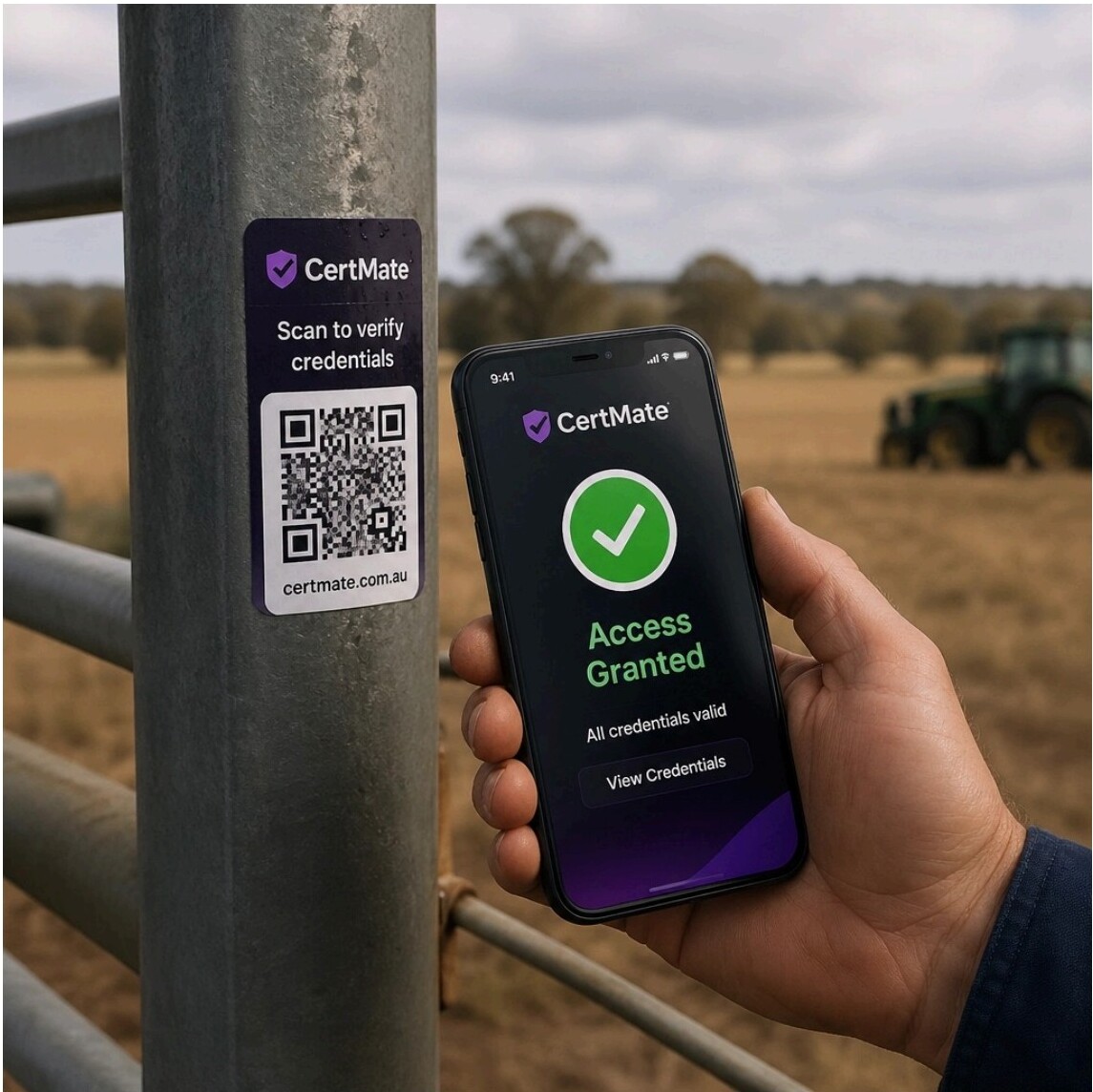
- Deploy QR codes — Replace the clipboard with tamper-proof QR codes at every entry point.
- Enforce the standard — Make digital sign-in a non-negotiable condition of entry. No scan, no entry.
Execution Is the Only Metric That Matters
A biosecurity plan that sits in a drawer is just a piece of paper. True compliance is measured by what happens at the gate, on the ground, every single day.
Digital systems like CertMate enforce your plan automatically. They ensure that inductions are delivered consistently, risks are declared before entry, and every movement is tracked without relying on someone's memory or a leaky pen.

Why It Matters More Now Than Ever
The pressure on Australian agriculture is mounting. Regulatory oversight is increasing, and supply-chain partners are demanding higher levels of transparency. Whether it's managing the risk of Foot and Mouth Disease (FMD) or ensuring weed seeds aren't hitching a ride on a contractor's ute, the "good enough" approach of the past is no longer sufficient.
Farms and agribusinesses are now expected to demonstrate active control. This means having a system that works in the remote, offline conditions of the paddock while providing the high-tech reporting required by the boardroom.

The Bottom Line
Paper visitor logs are familiar, but familiarity does not equal protection. They create gaps in traceability, fail under the heat of an audit, and provide a false sense of security that can be shattered by a single biosecurity breach.
In today's environment, the paper log isn't a safeguard — it's the weak link in your chain.
It's time to retire the clipboard and move to a system designed for the future of farming. Land access compliance isn't about the paper you have; it's about the proof you can provide.
Ready to close the gaps in your biosecurity? Get in touch with our team to see how CertMate can streamline your site access and protect your property today.