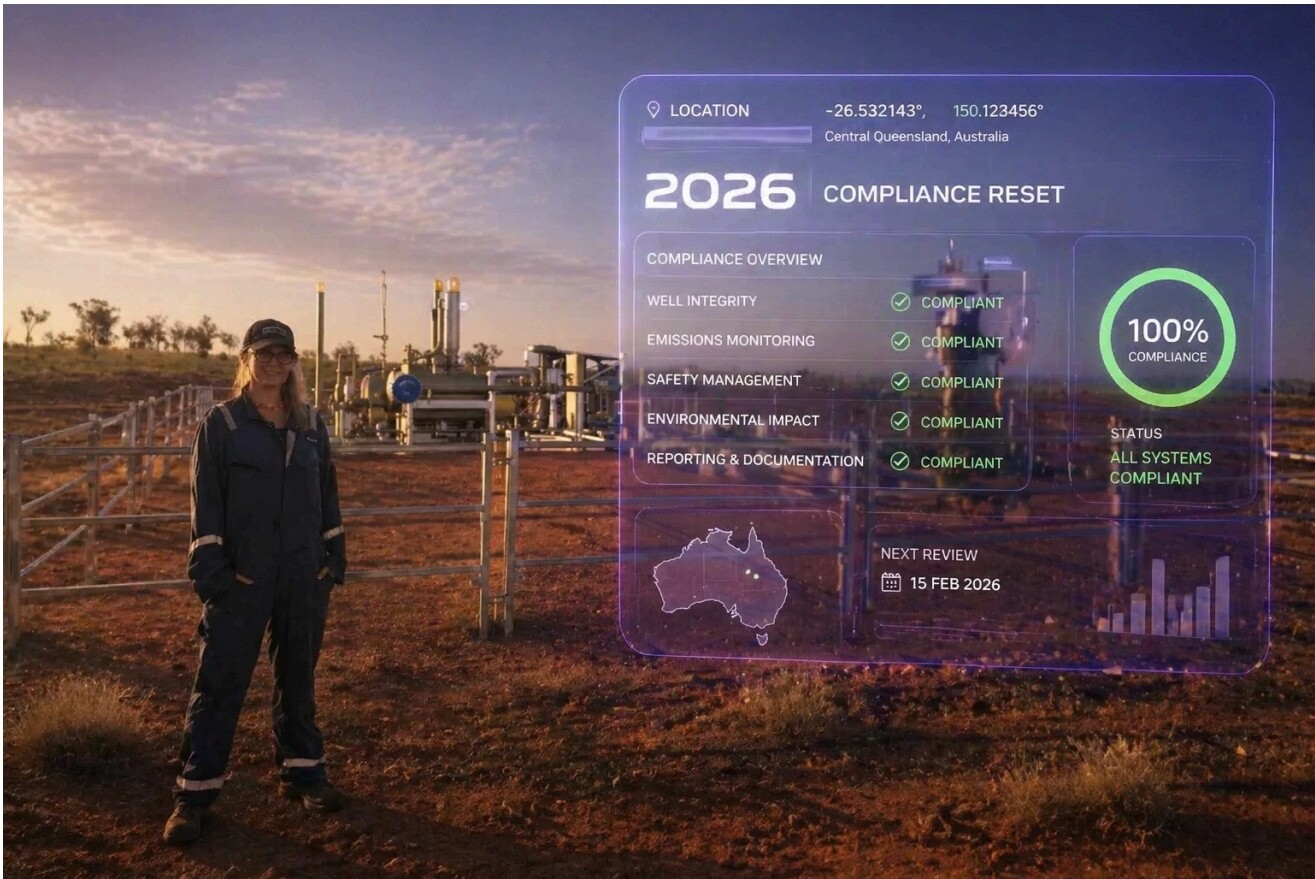
New Year, New Risks: Resetting Land Access Compliance for 2026
Carina Steinbakk
January creates a false sense of calm. Operations restart. Teams return. Projects kick off. Contractors arrive. And quietly, risk resets.
Across the Australian landscape—from broadacre agriculture to multi-billion dollar renewable energy infrastructure—January is the month where land access compliance either hardens into a competitive advantage or quietly dissolves into a liability. The difference isn't found in a policy document sitting in a drawer; it's found in your systems.
If you're still relying on last year's spreadsheets and "verbal handshakes," you're already behind the 2026 standard.
Why January Is a High-Risk Month for Land Access
January isn't just a new page on the calendar; it's a total shift in your operational profile. The relative quiet of December is replaced by a surge of "newness" that manual systems aren't built to handle.
January introduces change at scale. This change often includes:
- New contractors and service providers: Teams who don't know your gates, your biosecurity rules, or your expectations.
- New projects or sites: Expanding into areas where the ground rules haven't been stress-tested.
- New vehicles and equipment: Machinery moving from one risk zone to another without a verified washdown history.
- New team members: Fresh faces who haven't been through the rigour of your specific induction process.
- Expired inductions: Outdated records that make your current site access technically illegal or a breach of insurance.
Each change introduces uncertainty. Without a deliberate reset, organisations carry forward assumptions from the previous year—even though the risk profile has shifted entirely. Land access compliance must be reset as actively as your operations.
The Problem With "Rolling Over" Last Year's Compliance
It's tempting to think that because "we didn't have an issue last year," the current system works. But "no issues" isn't the same as "compliance." Many organisations start the year by re-using legacy tools that were never fit for purpose in a high-consequence environment.
When you roll over manual visitor logs, legacy spreadsheets, and informal access approvals, you create a compliance gap. This gap is most dangerous in the early months of the year when:
- Systems are not yet under pressure: You don't notice the cracks until the contractor volume doubles in March.
- Records feel "good enough": Scraps of paper and email trails feel like evidence until an auditor asks for a time-stamped audit trail.
- Shortcuts are rationalised: "Just let them in, we'll do the induction when they get back to the office" becomes the default setting.
Those early gaps compound quickly. By the time an issue surfaces—be it a biosecurity breach or an insurance claim—your exposure has already occurred. You can't retroactively fix a lack of evidence.
Land Access Compliance Is No Longer Industry-Specific
There was a time when land access was seen solely as a "farming issue." That era is over. In 2026, the regulatory and commercial pressure in Australia has unified the standards across almost every sector that touches the ground.
Whether you're in agriculture, mining, or utilities, you face the same fundamental question: Can you prove who accessed your land, when, and under what conditions?
This benchmark now applies across:
- Agriculture and Agribusiness: Protecting land from weed contamination and disease.
- Infrastructure and Construction: Managing massive contractor fleets across sensitive easements.
- Utilities and Energy: Ensuring maintenance crews don't compromise site integrity.
- Resources and Renewables: Documenting a verifiable chain of custody for landholders.
- Transport and Logistics: Verifying vehicle hygiene before entry to secure sites.
Why Digital Systems Matter at the Start of the Year
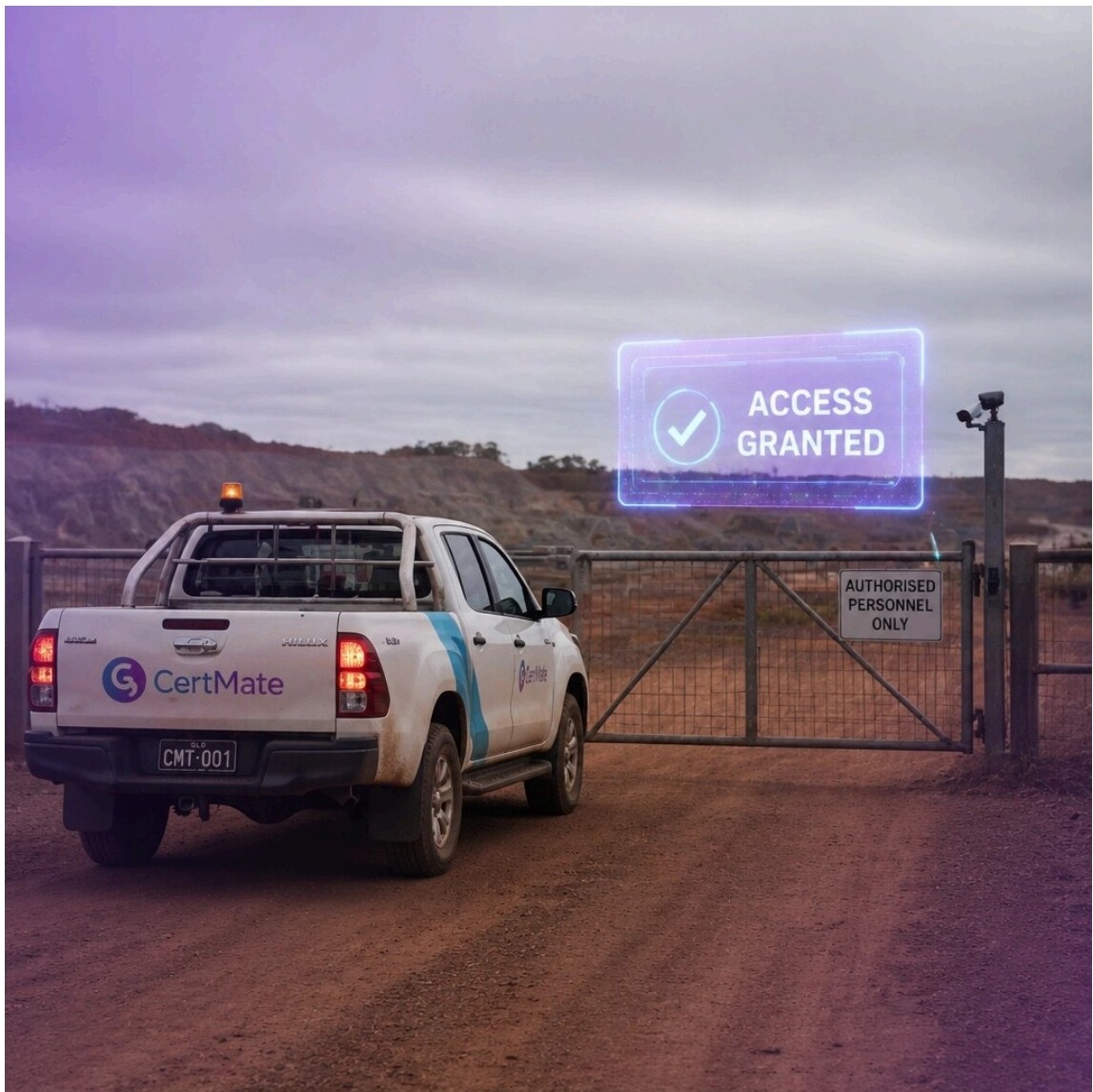
January is the easiest time to change systems—before habits set in and the "busy season" becomes an excuse for non-compliance. Digital land access platforms like CertMate by Aevi Tech support a clean reset by turning policy into an automated workflow.
Capture real-time data. Verify certificates instantly. Eliminate the paperwork trail that leads to audit failure.
Digital systems enable a clean reset by:
- Standardising digital inductions: Ensure every person on-site has seen the same rules, regardless of which gate they used.
- Enforcing access approval before entry: Stop unauthorised access by design, not by hope.
- Linking people, vehicles, and locations: Create a connected record that shows the exact "who, what, and where."
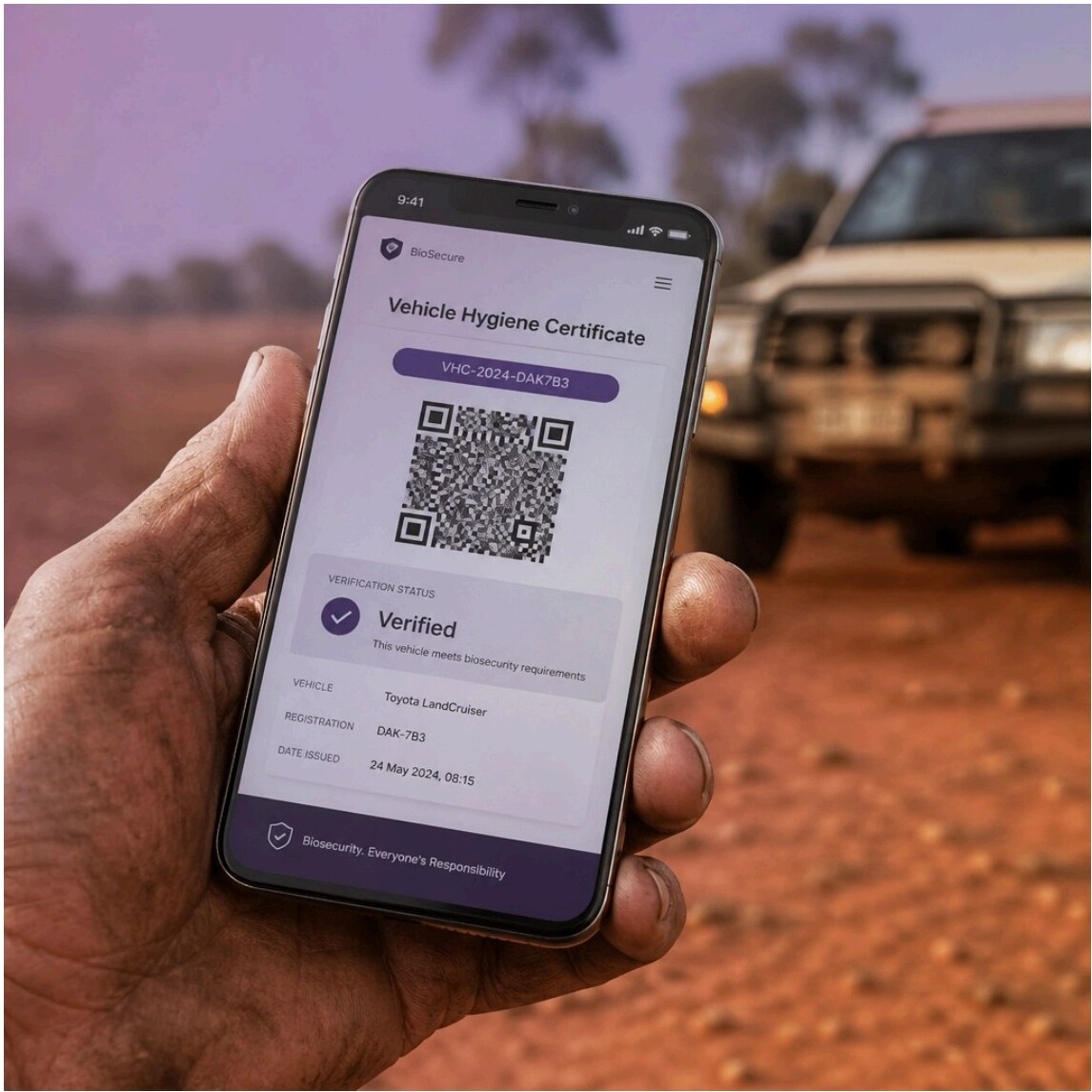
- Supporting vehicle hygiene declarations: Capture timestamped photos and GPS data that prove a washdown happened before the truck arrived at your gate.
- Creating audit-ready records from day one: No more scrambling in November to find a visitor log from January.
This ensures compliance is built into the act of access—not retrofitted later when the pressure is on.
New Contractors, New Vehicles, Same Expectations
One of the biggest January risks is onboarding. You're dealing with third-party providers who are juggling multiple clients and varying rules. New contractors often:
- Haven't seen site-specific biosecurity rules.
- Assume prior experience on other sites applies everywhere.
- Use shared or newly acquired vehicles with unknown hygiene histories.
- Start work before inductions are completed because they're "only there for an hour."
Digital contractor compliance ensures there is no ambiguity. With CertMate, if the induction isn't done, the access isn't granted. If the vehicle hygiene certificate isn't valid, the QR code won't scan. It's a defence-grade barrier that protects your land from the "new guy" risk.

Compliance Reset = Risk Reduction + Commercial Confidence
A January compliance reset does more than just tick a box for a regulator. It builds commercial confidence. In an environment where insurers and boards are looking for "defence-grade" audit trails, digital evidence is your greatest asset.
A proactive reset:
- Improves audit readiness: You're always ready, because the data is captured in real-time.
- Supports certification and assurance programs: Meet the high standards of ESG and industry-specific certifications effortlessly.
- Builds insurer confidence: Lower your risk profile by proving you have active controls in place.
- Strengthens supply-chain trust: Show your partners and landholders that you value their assets as much as your own.
- Reduces friction: When the system works, people move through gates faster.
Organisations that reset compliance early spend significantly less time reacting to crises later in the year.
From Annual Review to Continuous Control
The shift underway in Australian compliance is clear: we are moving from annual reviews to continuous control. You can no longer wait until the end of the year to see if your processes worked. You need to know they are working now.
The evolution is simple:
- From manual records → to digital evidence.
- From site-by-site processes → to connected systems.
- From "we think it's okay" → to "here is the proof."
January is the moment where that shift is easiest to make. It's when "new year intentions" become operational reality.

Why CertMate Fits the Start-of-Year Moment
CertMate is purpose-built for the reality of the field. It's not bloated office software; it's a rugged, mobile-first platform designed for operators who need to get on with the job without compromising on compliance.
If you manage land access at scale, operate across remote regions, or rely on a mobile contractor workforce, you need a system that works under pressure.
January adoption allows your organisation to:
- Start clean: Clear out the old spreadsheets and start 2026 with a single source of truth.
- Set expectations early: Show your contractors and teams exactly what "good" looks like from their first day back.
- Avoid compliance debt: Don't let six months of bad data pile up before you decide to fix the system.
That is how compliance becomes an asset—a tool for efficiency—rather than a burden.
The Bottom Line
Every new year resets risk. The organisations that recognise this—and reset their land access compliance accordingly—are the ones best protected when the inevitable scrutiny arrives.
January is not just a fresh start. It is a decision point. You can choose to roll over the risks of 2025, or you can choose to set a new standard for 2026. Digital systems like CertMate ensure that when the year unfolds and the pressure ramps up, your land access compliance doesn't fall behind.
Don't wait for an audit to tell you your system is broken. Reset your compliance today.
Explore how CertMate can secure your 2026 operations.