Digitising Contractor Compliance: The Missing Link in Australian Land Access Control
Carina Steinbakk
Contractors keep Australian agriculture moving. They service heavy equipment, transport livestock, manage critical infrastructure, and provide the specialist expertise needed to keep multi-million dollar operations running.
But there's a critical reality we have to face: that essential mobility creates one of the largest biosecurity and land access compliance gaps in the industry. Every time a contractor moves between properties, they bring a new layer of risk.
If you're relying on "trust" or a paper sign-in sheet at the gate, your biosecurity plan is already failing. Contractor compliance is the missing link in land access control—and it's time to close the gap.
Why Contractors Pose a Unique Compliance Challenge
Unlike your permanent employees, contractors are high-frequency movers. They don't just stay on one site; they operate across regions and biosecurity zones.
Think about the average day for a specialist service tech. They might visit three different farms, two infrastructure sites, and a shared machinery yard. This mobility creates a perfect storm for biosecurity risk because they:
- Move between multiple properties daily: Often crossing different risk profiles.
- Work across different biosecurity zones: Potentially carrying seeds or pathogens from high-risk areas to clean zones.
- Use shared vehicles and equipment: Which may not have been properly washed down between jobs.
- Operate under varying site rules: Leading to "compliance fatigue" and confusion.
- Are often onboarded informally: Relying on a quick chat rather than a documented process.
Without a strong, digital system, you're left with nothing but verbal instructions and assumptions. In the world of regulatory audits and biosecurity breaches, assumptions are a liability you can't afford.
Contractor Compliance Is a Land Access Issue
Too often, we treat contractor compliance as an HR box to tick or a safety checklist. In reality, it's a land access compliance problem.
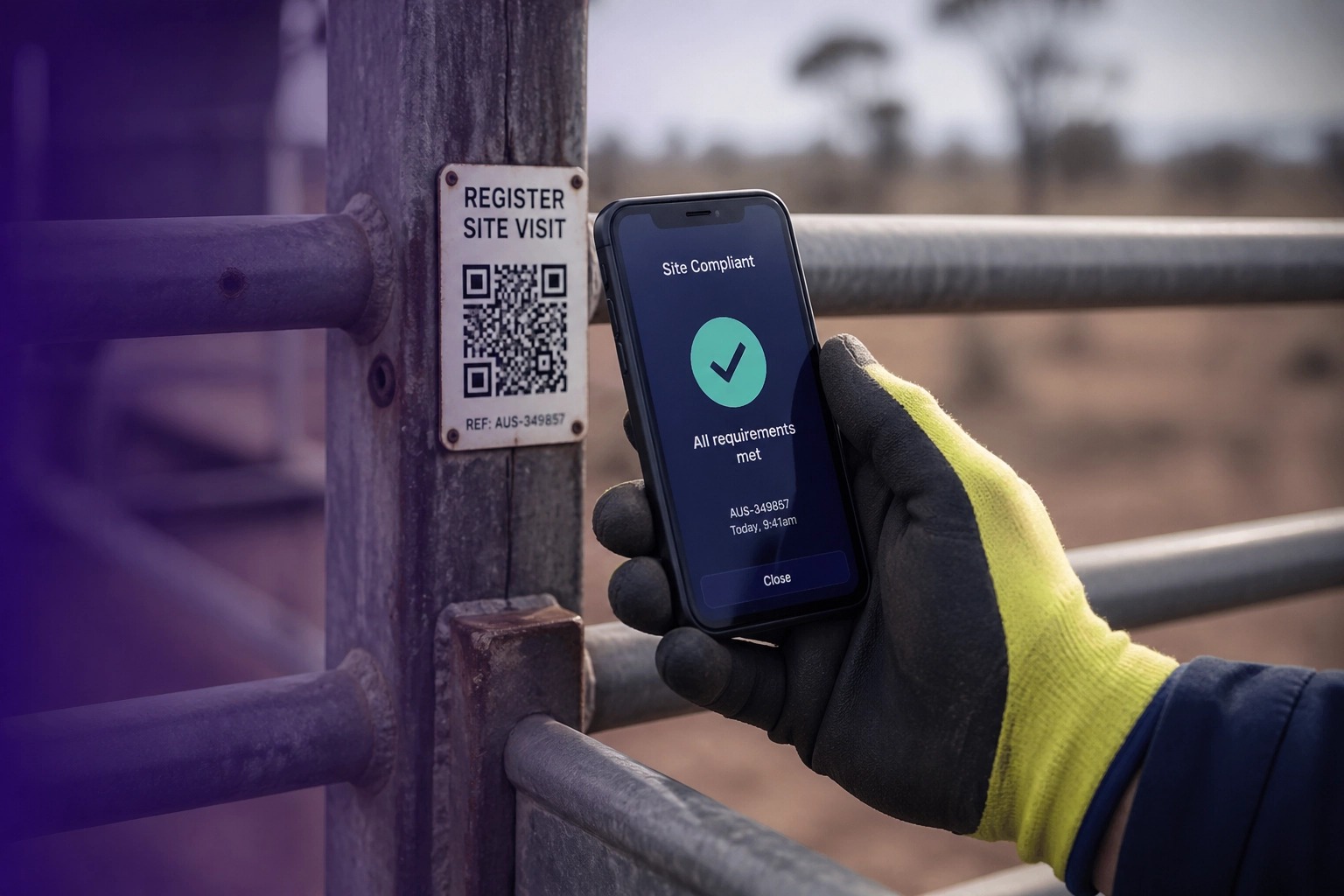
In states like Queensland and New South Wales, the General Biosecurity Duty (GBD) isn't a suggestion—it's a legal obligation. To maintain a defence-grade audit trail, every contractor entering your property must be able to demonstrate:
- Who they are: Verified identity and company details.
- Why they are there: A specific, approved reason for access.
- What rules apply: Site-specific biosecurity and safety protocols.
- What risks they carry: Recent property visits and hygiene status.
- Understanding and acceptance: Proof they've read and accepted your conditions.
If you can't prove these five things instantly, your land access compliance is broken. Intent doesn't matter; evidence does.
The Breakdown Happens at Induction
Inductions are where your biosecurity strategy either works or fails. If your induction process is manual, it's likely:
- Delivered verbally: Meaning it's never the same twice.
- Rushed during busy periods: When "getting the job done" takes priority over paperwork.
- Inconsistent across sites: Confusing for contractors and a nightmare for HSE managers.
- Poorly recorded: Usually a name on a clipboard that ends up lost or unreadable.
- Impossible to audit: You can't search a paper logbook for a specific vehicle's history in seconds.
This inconsistency is the enemy of compliance. Digital systems remove the human element. They ensure every single contractor receives the exact same information, records their completion with a timestamp, and captures a legally binding declaration before they even set foot on your land.

Connecting Contractors to Access, Vehicles, and Sites
True land access control requires a "triangle of visibility." You need to connect three distinct elements into one system:
- People: Contractors and visitors.
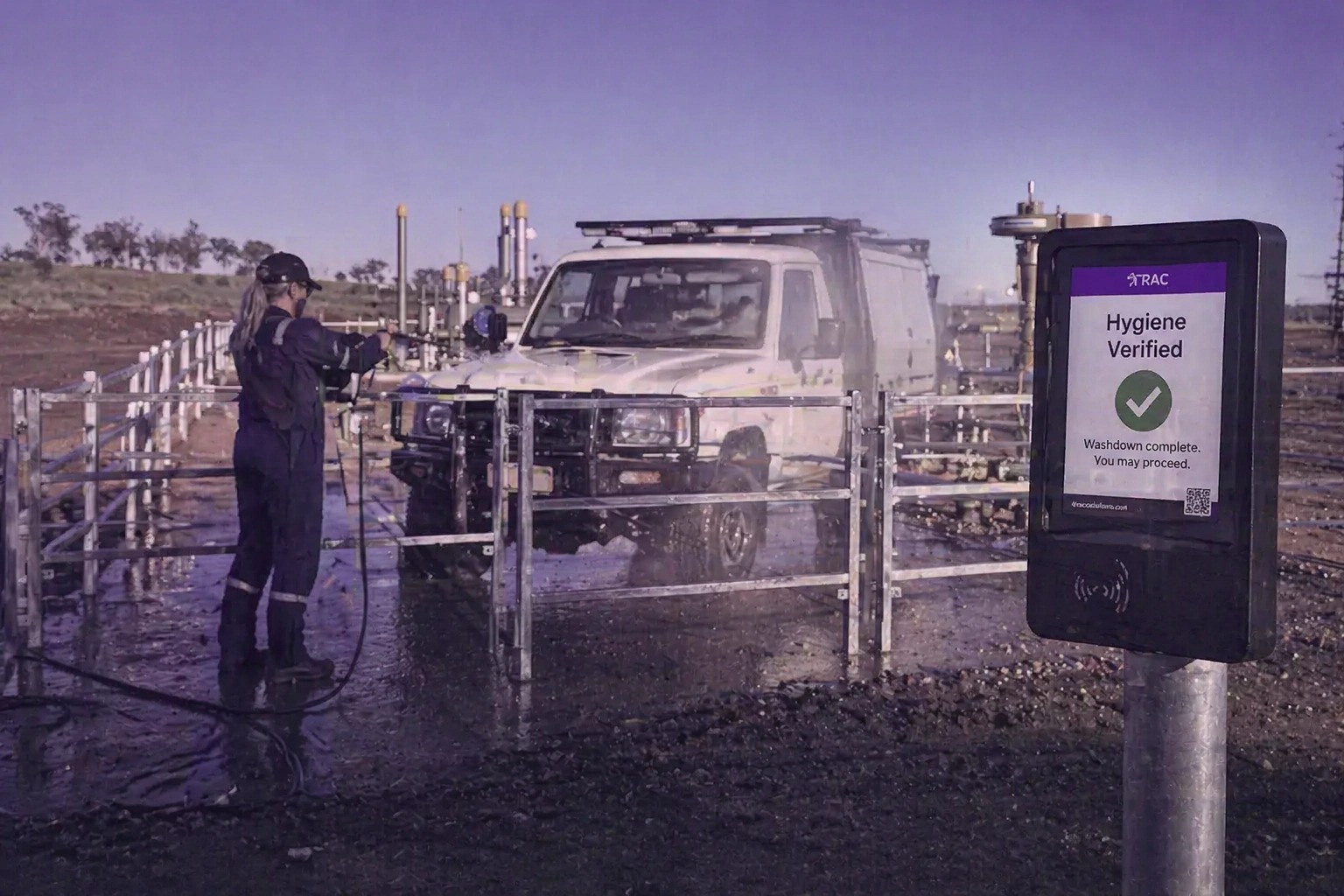
- Vehicles: Their movement, hygiene status, and GPS-verified washdowns.
- Sites: The specific rules, locations, and risk profiles of your properties.
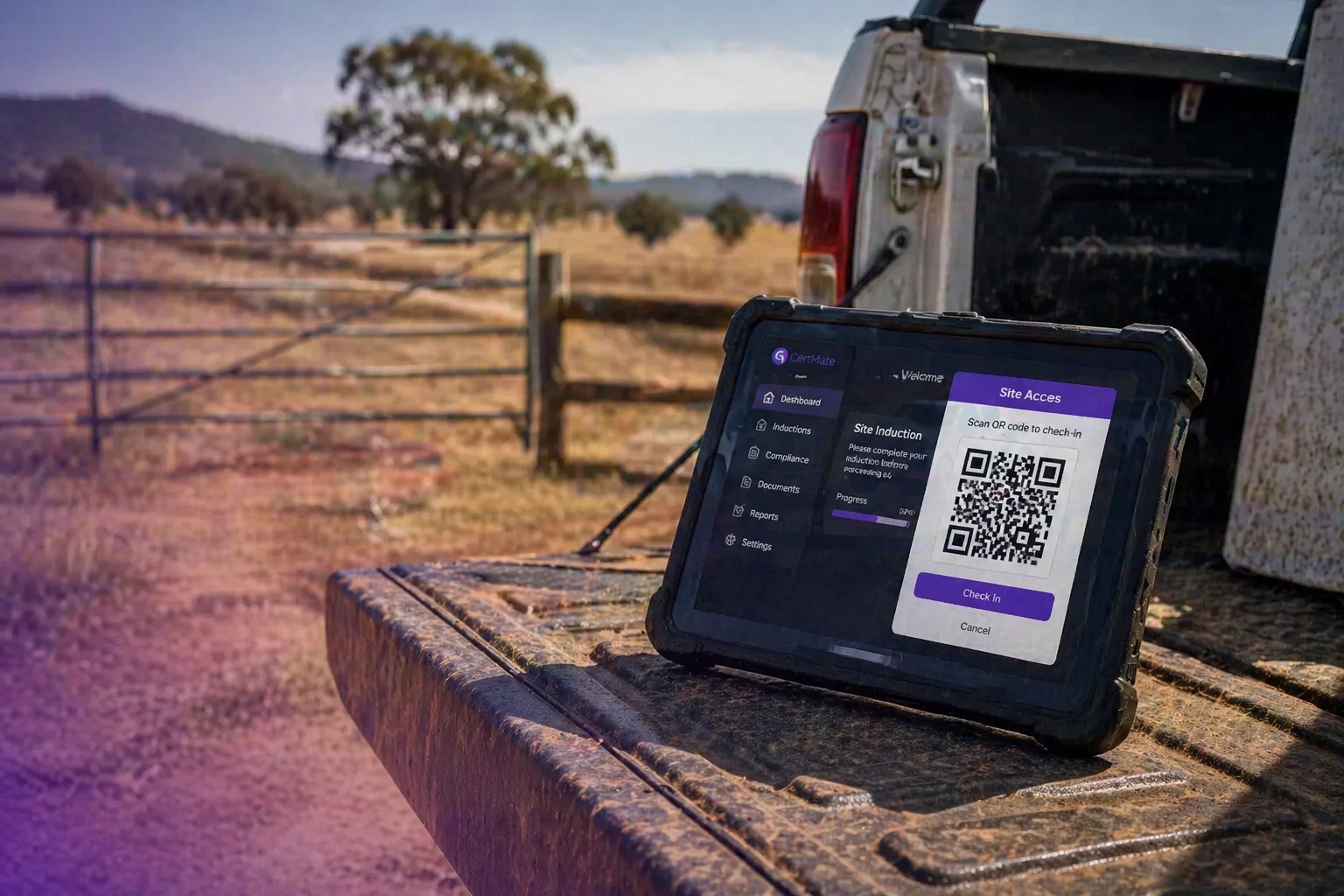
This is exactly why we built CertMate. Our platform is designed to link these elements into a single, secure compliance ecosystem. CertMate solves the contractor gap by:
- Managing Digital Inductions: Streamlining the onboarding process so it's finished before they arrive.
- Linking Approvals: Connecting contractors to specific land access permits.
- Recording Hygiene Declarations: Capturing photos and GPS data for vehicle washdowns.
- Creating Audit-Ready Records: Storing everything in a secure, searchable cloud-based dashboard.
This turns contractor movement from a "blind spot" into a controlled, transparent process. You're no longer asking "What happened?"—you're seeing exactly what the record shows.
Why Digitisation Matters for Australian Operations
The Australian landscape is shifting. We operate under some of the strictest biosecurity expectations in the world. Whether you're managing an export-focused broadacre farm or renewable energy infrastructure across several states, the pressure is increasing.
Regulatory oversight is tightening. Supply-chain partners are demanding better traceability. Insurers are looking for proof of risk mitigation.
Digital contractor compliance supports:
- Biosecurity Traceability: Knowing exactly where a vehicle has been if an outbreak occurs.
- Land Access Certification: Providing instant proof of compliance to site managers.
- Audit Readiness: Reducing the stress of end-of-year reviews or regulatory checks.
- Insurance Confidence: Demonstrating a proactive approach to risk management.
From Trust-Based to System-Based Compliance
Historically, we've relied on trust.
"They've been here before." "They're experienced; they know the rules."
In the modern industry, trust isn't enough. Modern compliance relies on systems.
Digitisation removes the ambiguity. It replaces assumptions with evidence. When you move to a system-based approach, you aren't just protecting your land; you're protecting your business's future.
Digital systems like CertMate are designed to work in the real world: offline, in remote areas, and in the middle of a dusty paddock. They reduce compliance fatigue by making the process part of the job, not an extra piece of admin.

The Bottom Line
Contractors are essential to your success. But unmanaged access is an unacceptable risk.
By digitising your contractor compliance, you:
- Strengthen land access control.
- Improve biosecurity outcomes.
- Simplify audits and certifications.
- Protect your operation when scrutiny arises.
Land access compliance only works when your people, your vehicles, and your sites are connected. That connection is what we deliver.
Ready to close the gap in your land access control? Explore how CertMate can secure your property today.